
My Autumn in Greenland – As This Chapter Closes
Home / Vælg Sprog / Choose Language My Autumn in Greenland – As This Chapter Closes The snow has settled like a quiet blanket over
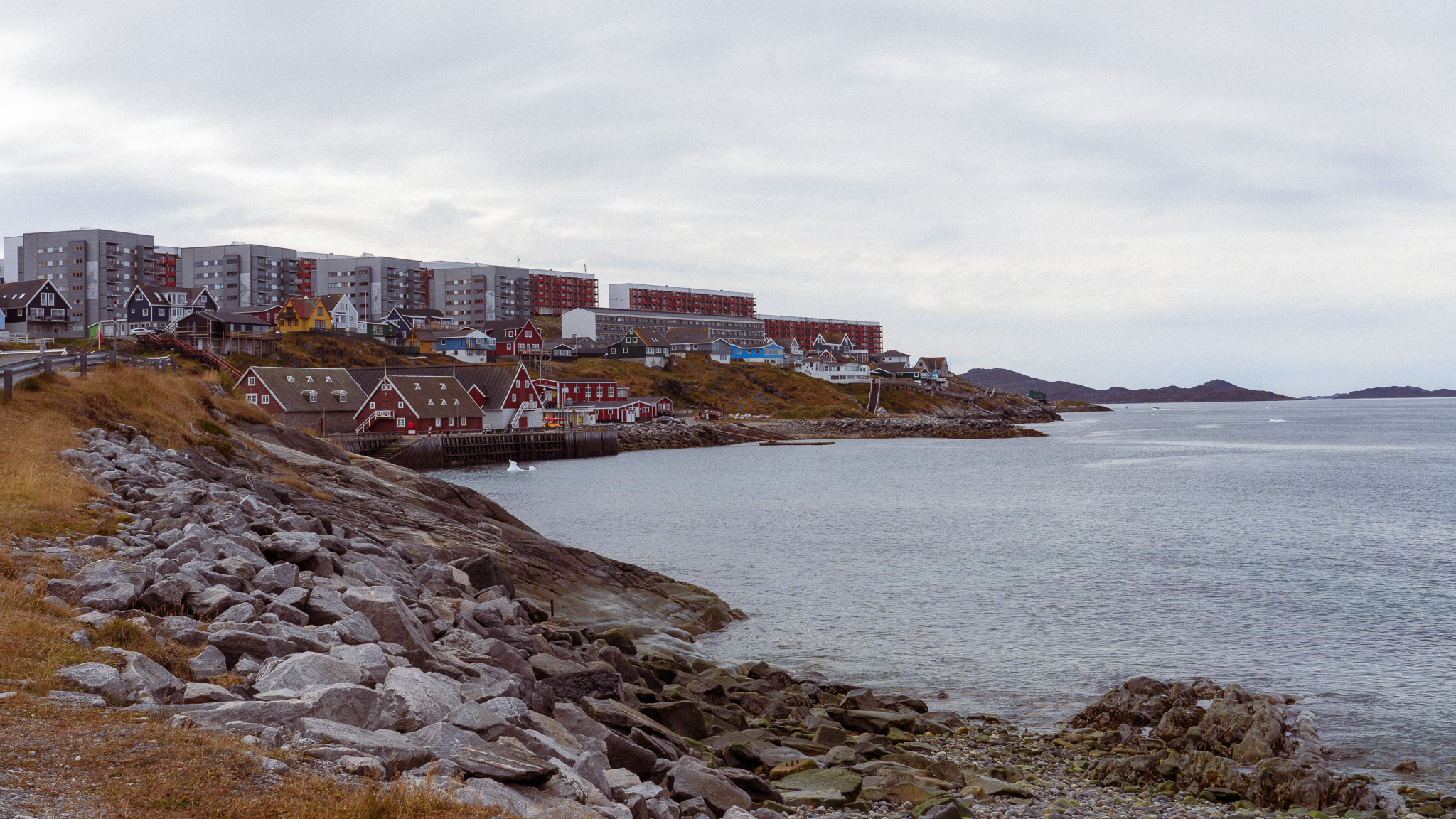
This past Monday marked my first full month here in Nuuk. A month filled with experiences and time in nature—yet also a month where everyday life has begun to truly take hold. My daily routines now include classes, heavy reading, and, of course, attending to my other projects.
As some of you may have already noticed, September was also the month when my friend, journalist, and anthropologist Mie Olesen, and I launched the cultural magazine Kulturform.dk.
Kulturform is a new platform with the ambition of shedding light on stories about art and culture that rarely make it into mainstream media or that are hidden within small niche genres. Our goal is to create a space that gathers these stories from across the cultural landscape in one place. The magazine aims to inspire, foster connections, and spark new interests in anyone curious about exploring the world of art and culture.

Alongside the work of getting KULTURFORM off the ground, I’ve naturally kept up with my studies at Ilisimatusarfik—which, after all, is the reason I’m here. Compared to many universities, it’s small, but to me, the size makes it feel almost homelike. In fact, Ilisimatusarfik reminds me quite a bit of DPU, both in terms of scale and atmosphere. When a university has roughly a thousand people total—students and staff—you quickly start to recognize most faces. The downside, of course, is that such a small student body becomes vulnerable to absences; on some days, the attendees can be counted on the fingers of one hand.
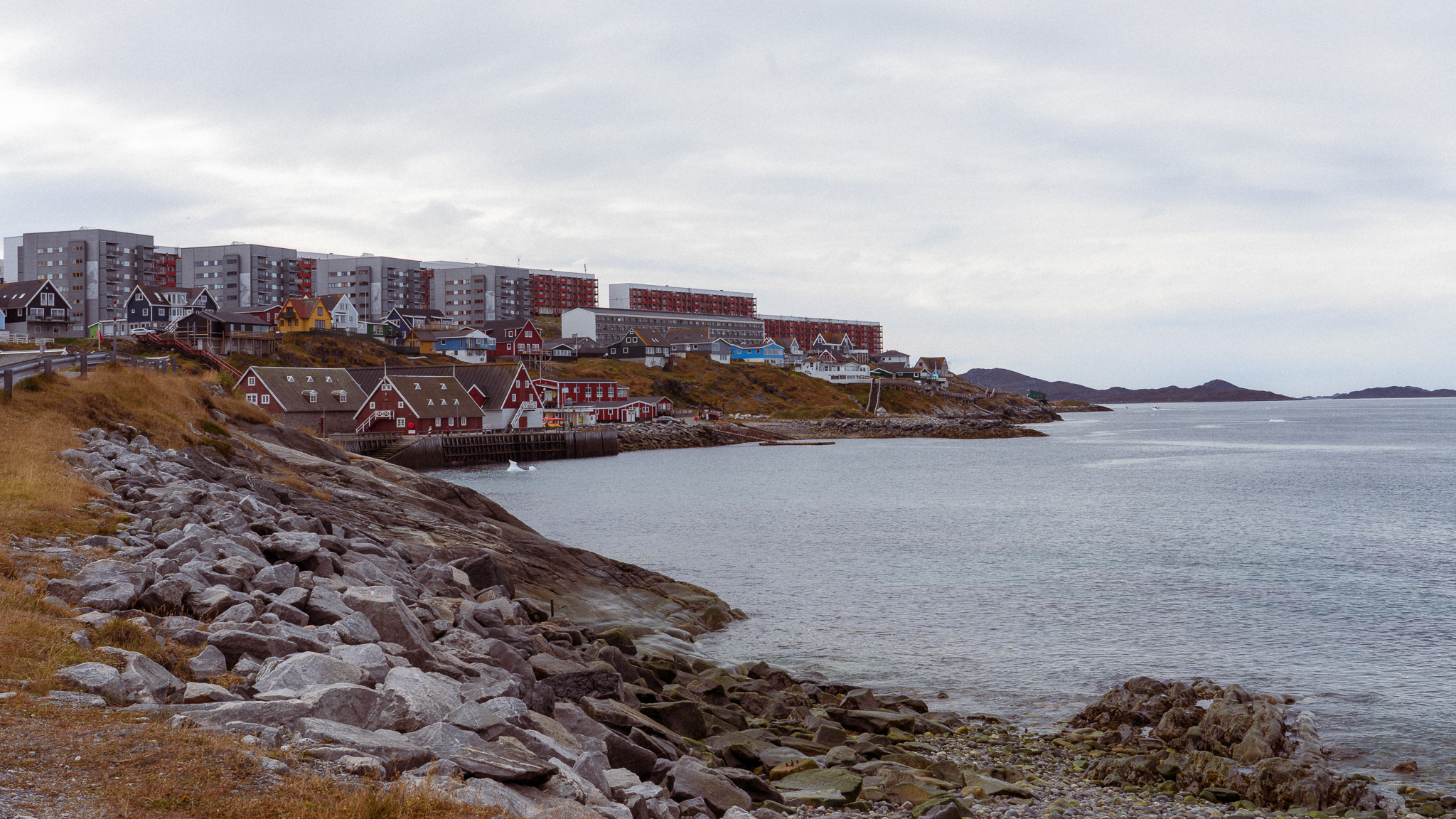
Social life among exchange students is also a high priority, and we take turns organizing small weekend gatherings. On Saturday, September 13, we opened the doors of Block 15 so others could drop by for food and company. That evening, Strik og Drik (Knit and Drink) at Katuaq was on the schedule, but beforehand, we had promised to cook dinner. I decided to dive into a pot of gumbo—though without okra. Everything was chopped and prepped before I started the roux. I doubt I’ll ever again make a roux with a kitchen view quite like the one here in Nuuk.

Managing the oil and flour proved tricky, since the stovetop heats up fast and stays hot for a long time. After a while, I added the holy trinity, then spices, chicken, and finally sausage. In Denmark, I usually opt for cabbage sausage, as it retains its texture well; in New Orleans, of course, you’d choose andouille.
Here in Nuuk, I improvised with homemade smoked musk ox frankfurters from Brugseni, and the result was surprisingly good.
After a hearty serving of New Orleans soul food, we made our way to Strik og Drik. It’s hardly a secret that I’m not exactly at home in the world of knitting. We were four men who had bought tickets at the last minute, and we sat up on the balcony, mostly focusing on the “drinking” part.

You have successfully joined our subscriber list.
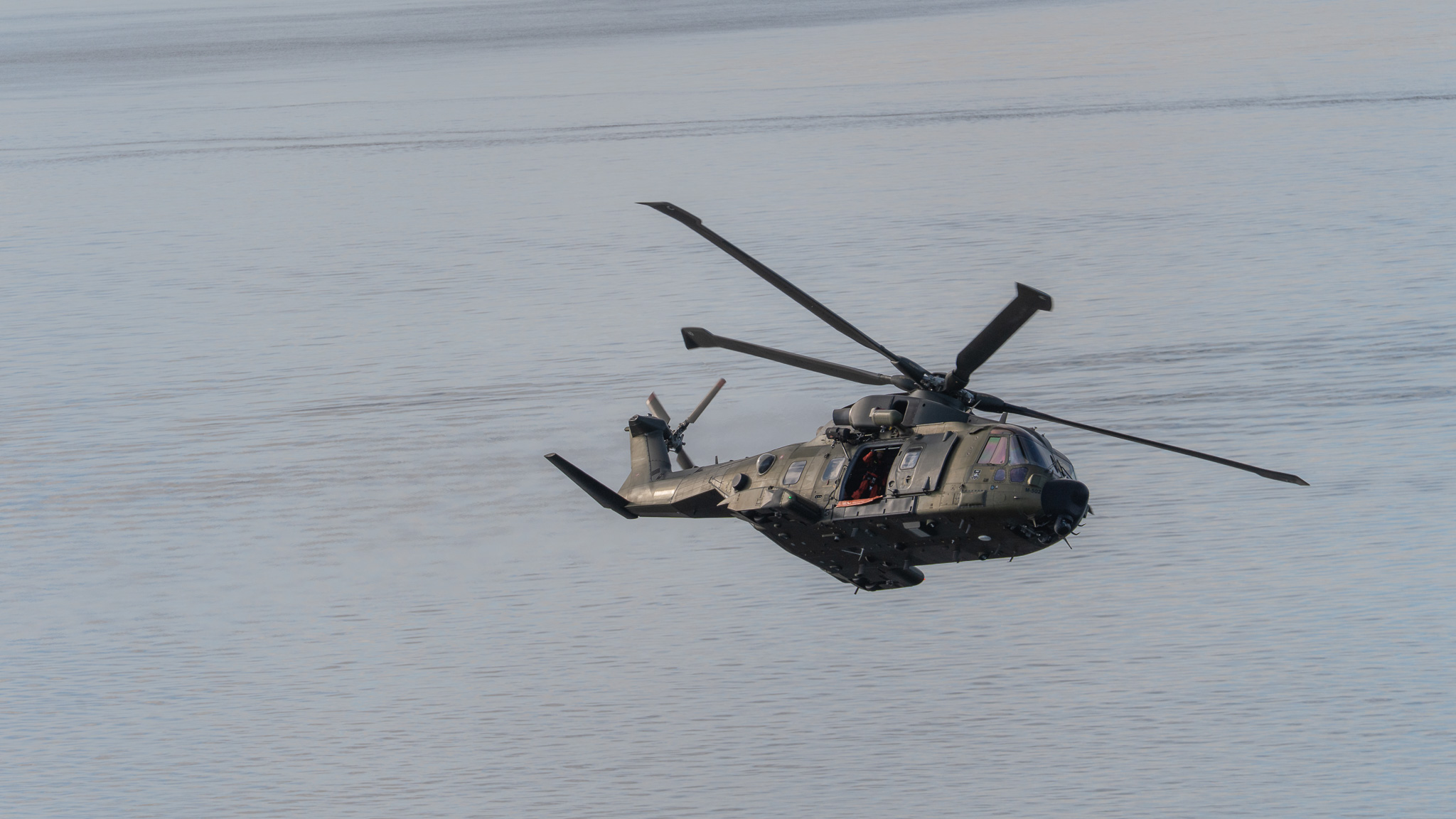
In recent weeks, Nuuk has been shaped by a NATO exercise, which has left its mark on the skies, the sea, and even the city’s atmosphere. Navy vessels have been patrolling the fjord, while helicopters have frequently buzzed over the mountains and streets.
While many welcomed the exercise, others wished for a different timing, as it coincided with the peak of reindeer hunting season—a pursuit that is expensive, time-consuming, and resource-intensive. When helicopters fly over grazing areas, the animals naturally scatter.
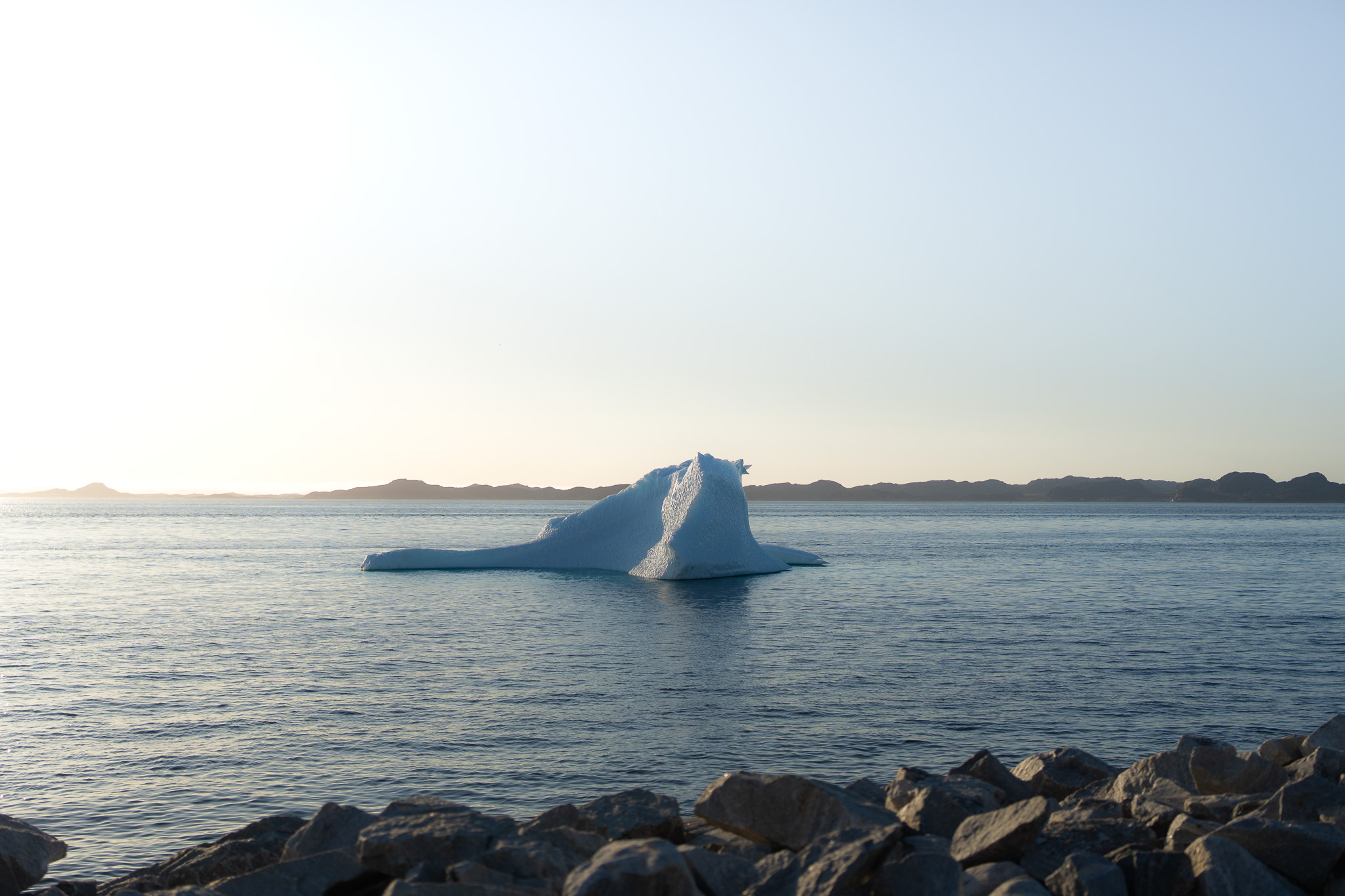
On Sunday, September 14, I went fishing again at what locals call “The End of the World.” In the midst of the stillness, a navy ship passed by, and a helicopter thundered directly overhead.
Thankfully, the fish weren’t spooked. After several unsuccessful outings, I finally got a bite. The first one wriggled free, but later I managed to land a small cod. It had been a long time since I’d last held a fish destined for the dinner table, but a quick strike to the head did the job. I filleted the catch and stored it in the fridge for dinner, where I served it pan-fried in butter with salt and pepper, alongside gnocchi in garlic, onion, white wine, and parmesan.
On Wednesday, September 17, I set out once again to explore the mountains behind Nuuk. My goal was to climb higher and go farther. The route began at Ilisimatusarfik, past the prison, through Paradise Valley—and then straight uphill. Along the way, I met a young English-speaking hunter out after ptarmigan, and for a stretch, our paths ran parallel.
For provisions, I had packed a salmon-and-shrimp sandwich and raspberry slices from Brugseni—surprisingly effective fuel, as it turned out.
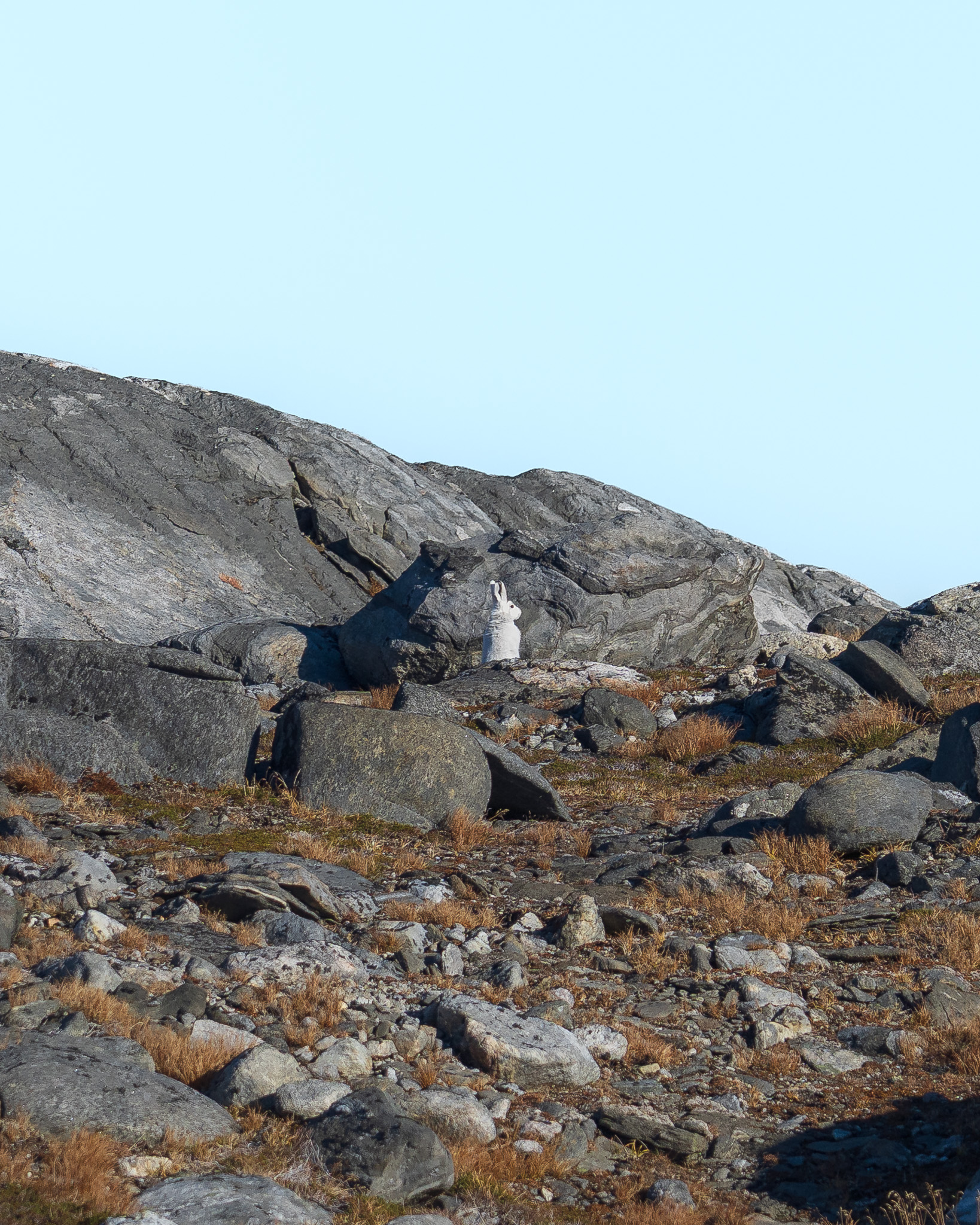
On a plateau, I pulled out my camera, and the timing couldn’t have been better. Out of nowhere, a snow hare bounded between the rocks. I managed to snap a few shots from a distance, but regretted not bringing my 100–400 mm lens. A little FOMO, I suppose, is universal.
The trek home ended back at Block 15, and when I reached the entrance, my watch showed 20 kilometers.
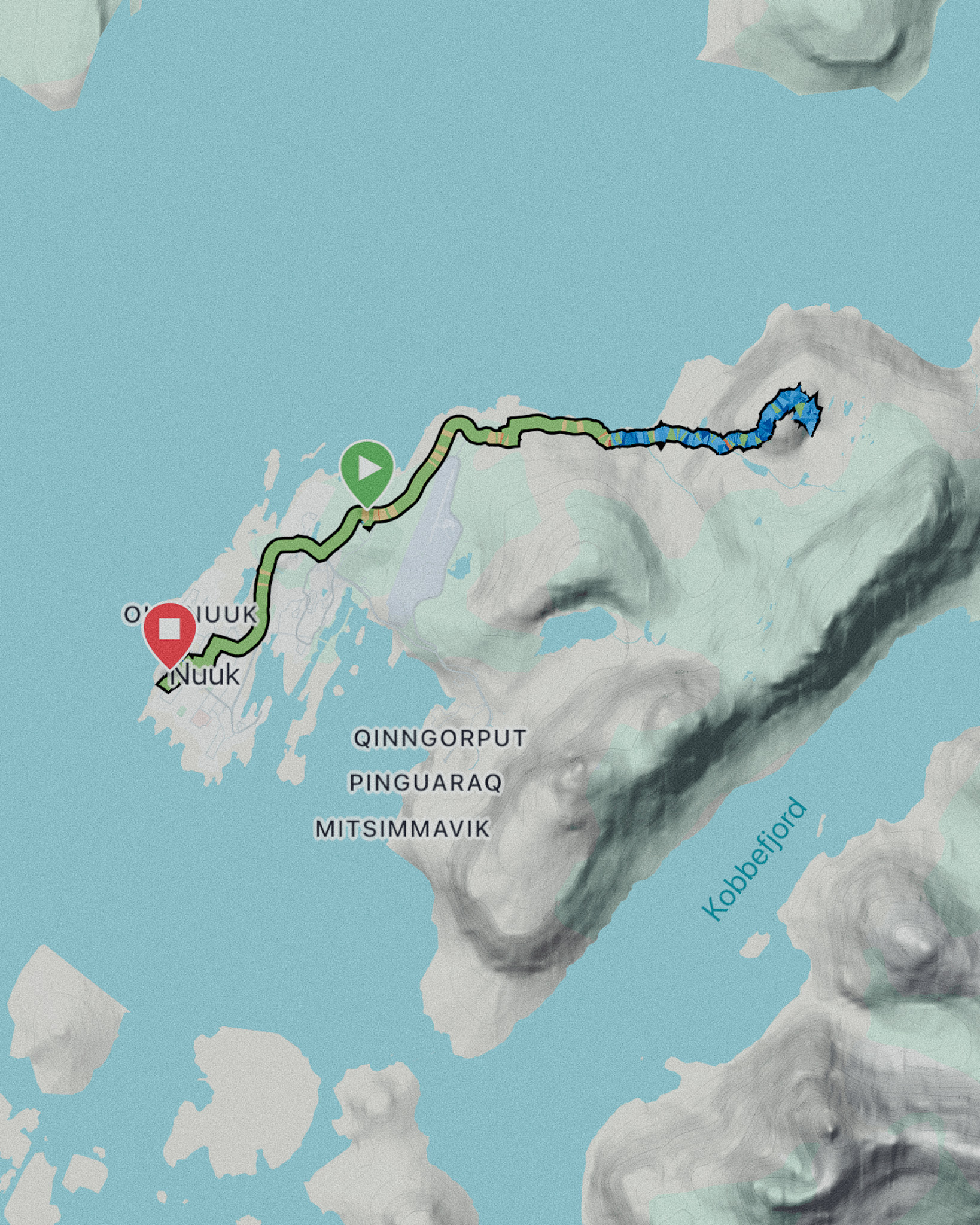
Back home, my body was worn out and in need of a hot shower. Afterwards, I dressed properly and headed to Pascucci Café in Nuuk Center to study. At the apartment, the books likely wouldn’t have received the same attention—or at least not with open eyes. With a cappuccino, my books in front of me, and the background hum of café life, I worked my way through the readings.
On my way back, I passed Katuaq, and just then a message popped up: a friend had an extra ticket for the premiere of Qajaq Man. Tired as I was, it would have been foolish to say no, so I went straight to the entrance.
The premiere also marked the opening of the Nuuk International Film Festival (NIFF), accompanied by a cozy reception featuring finger food and drinks.
The film, directed by Joe Derrick, follows Mike Keen on a journey along Greenland’s coast. The story highlights not only nature and adventure but also community, Inuit traditions, and a food culture that stands in stark contrast to the sometimes ultra-processed diet of the Western world. Produced by Ill Kippers Productions—with Nikolaj Coster-Waldau as co-owner and producer—the film successfully balances entertainment and thought-provoking elements.
That said, it lost me a bit during the scientific sections: Keen replaced his British diet with a traditional hunter’s diet, while researchers from Ilisimatusarfik monitored the changes. After 3,500 kilometers by kayak and 75 days on the new diet, the numbers showed remarkable improvements. An important study, yes—but in my view, the film should have been clearer about the methodological limitations. A sample that small can’t possibly represent larger populations. At the same time, the impact of intense physical activity seemed underplayed compared to the focus on diet.
From what I heard in passing, the data hadn’t even been fully processed yet, since the project is part of a longer-term study. In that case, the filmmakers should have waited before making it a central scientific claim—or at the very least, clearly stated that the findings were preliminary.
Well, this turned into a long blog post, and there’s plenty more I could add. But that will have to do for now. Thanks for sticking with me all the way to the end.
Home / Vælg Sprog / Choose Language My Autumn in Greenland – As This Chapter Closes The snow has settled like a quiet blanket over
Home / Vælg Sprog / Choose Language Somewhere Between Adventure and Everyday Life This past Monday marked my first full month here in Nuuk. A
Home / Vælg Sprog / Choose Language Nuuk – studentlifeand new adventures A little over a week ago, I arrived in Nuuk and began a